Is your attic quietly draining your cooling budget or turning buyers off during summer showings? In Missouri City’s hot, humid climate, what happens above the ceiling has a big impact on comfort, energy costs, and resale appeal. With a few targeted upgrades, you can make your home feel cooler, protect your roof, and boost value. Here is how to prioritize the attic projects that pay off in our area. Let’s dive in.
Why attics matter in Missouri City
Attics get superheated in our Gulf Coast summers, which can strain your AC and create moisture issues if airflow is poor. National guidance recommends you seal air leaks first, then bring insulation up to recommended levels, and keep passive ventilation balanced between soffit intake and ridge exhaust. You can review these best practices in ENERGY STAR’s overview of attic ventilation and sealing. Following that order of operations delivers the most comfort for the money.
Upgrades that deliver ROI
Air seal and insulate first
Sealing gaps around recessed lights, plumbing chases, and top plates stops humid air from moving into the attic. Then add blown-in cellulose or fiberglass to reach an appropriate ceiling R-value for a hot, humid climate. Typical midrange projects run about 1,500 to 4,000 dollars for insulation, with air sealing often adding a few hundred dollars. Attic insulation consistently ranks among the top ROI projects and can recoup a large portion of cost at resale, often in the 70 to 110 percent range depending on the market and documentation, according to Cost vs. Value analyses summarized by the building trades press (source).
Seal and insulate attic ducts
If your ducts run through the attic, leaks can waste cooled air and pull hot attic air into the system. Professional sealing and insulating of ductwork typically costs from the low hundreds to low thousands depending on scope and testing. Homeowners often see better temperature balance and lower cooling bills. Local utility programs sometimes offer incentives through approved contractors, including CenterPoint’s Houston-area efficiency programs (overview).
Improve passive ventilation and consider a radiant barrier
Balanced soffit and ridge venting lets your attic release heat without pulling air from your living space. Simple ventilation fixes often land in the low hundreds to low thousands depending on roof access and scope. A radiant barrier on the roof deck is a supplemental option in sunny climates, commonly around 1,000 to 2,000 dollars for a typical attic (cost overview). ENERGY STAR generally recommends passive ventilation with good air sealing and cautions that powered attic fans can pull conditioned air from the home if the attic floor is leaky. See their attic ventilation guidance for details.
Upgrade attic access and storage
An insulated, well-sealed hatch or pull-down stair improves efficiency and makes storage safer. Many upgrades fall in the 150 to 700 dollar range, depending on the product and installation complexity. Adding a simple plywood walkway in storage areas can help buyers see usable space. Keep soffit baffles clear so added flooring does not block airflow.
Finish the attic as living space
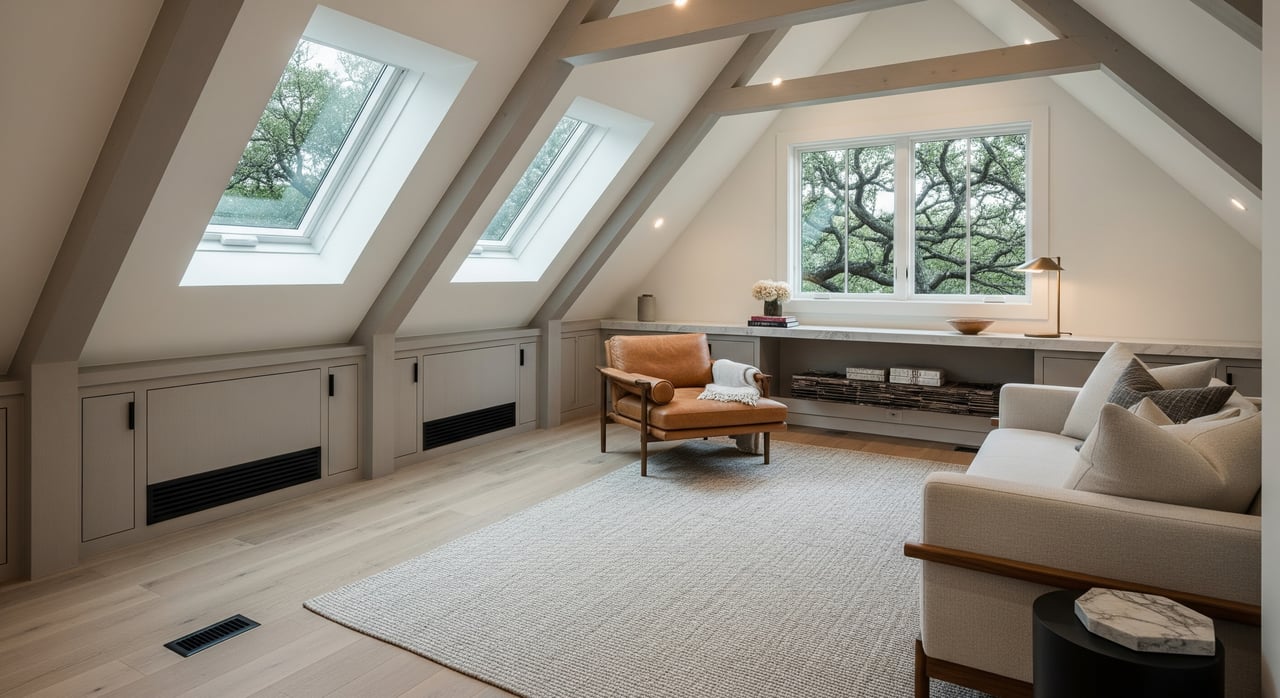
Converting an attic to a bedroom, office, or flex room can add conditioned square footage that buyers value. Typical projects often range from about 15,000 to 50,000 dollars depending on structural work, stairs, dormers, HVAC, and finishes. Many markets see 60 to 80 percent of costs recouped at resale, but results vary with permits, quality, and whether the space counts as legal living area (source). In Missouri City, conversions usually require building permits, proper egress, minimum ceiling heights, and permanent stairs. Review the city’s permit process before planning.
Consider a conditioned attic with spray foam
Some homes perform better by insulating the roof deck with spray foam, bringing the attic into the conditioned envelope. This can be effective when HVAC equipment and ducts live in the attic. It costs more than blown-in insulation, but it also provides strong air sealing (cost snapshot). An energy audit can help you decide if this approach is worth it for your floor plan and mechanical layout.
Permits, code, and timing in Missouri City
Missouri City generally requires permits for additions, structural changes, and any conversion that increases floor area or modifies mechanical, electrical, or plumbing systems. Insulation-only work may not need a building permit, but it is smart to confirm with Development Services. For attic conversions, plan on permits, plan review, and inspections, including egress and stair requirements. Start here to review the city’s permit process and portal.
Incentives and rebates to check first
- Texas SECO IRA programs. Texas is implementing Inflation Reduction Act rebates for weatherization measures like insulation and air sealing. Availability and rules evolve, so check the state’s latest guidance on SECO’s IRA page.
- CenterPoint Energy programs. Many Houston-area incentives flow through participating contractors. Ask whether your installer works with CenterPoint’s residential programs and verify current offers using this program overview.
- Weatherization assistance. Income-qualified households can explore LIHEAP and Weatherization Assistance for insulation and efficiency support.
A simple plan to maximize payoff
- Get an energy assessment or blower-door test to target air leaks and confirm duct leakage.
- Air seal first, then add attic insulation to recommended levels. Keep soffit baffles clear.
- Seal and insulate attic ductwork if present. Balance supply and return for comfort.
- Verify passive ventilation and consider a radiant barrier if your roof gets intense sun.
- If finishing the attic, engage a designer or contractor early to plan code-compliant stairs, egress, and HVAC. Pull permits before work begins.
- Document the work with receipts, photos, R-values, and any test results. These details help your listing stand out.
How to market upgrades when you sell
Energy and comfort updates are most compelling when you present them clearly. List the attic’s R-value, air-sealing scope, duct sealing results, and any warranties. Show before-and-after photos of access improvements or finished spaces. Note any rebates or transferable warranties. If the attic was converted, highlight the added conditioned square footage and code-compliant features in the property description.
Ready to make the right improvements before you list or buy? Get tailored guidance and a polished presentation plan with The Stone Haus Group.
FAQs
What attic upgrade gives the best value in Missouri City?
- Start with air sealing plus upgraded insulation, then seal attic ducts if you have them. This order delivers strong comfort and efficiency benefits per ENERGY STAR’s attic guidance.
How much does attic insulation cost near Missouri City?
- Typical midrange projects run about 1,500 to 4,000 dollars for blown-in or fiberglass insulation, with air sealing often adding a few hundred dollars depending on access and scope.
Do I need a permit to finish my attic in Missouri City?
- Converting an attic to living space usually requires permits, plan review, egress windows, permanent stairs, and inspections; confirm details with the city’s permit process before starting.
Will a finished attic increase my home’s resale value?
- It typically adds legal conditioned square footage and can recoup around 60 to 80 percent of costs at resale depending on quality and documentation, based on Cost vs. Value summaries (source).
Are powered attic fans a good idea for Gulf Coast homes?
- Often not; unless your attic floor is very well sealed, powered fans can pull cooled air from your home, so passive soffit-plus-ridge ventilation with air sealing is generally preferred per ENERGY STAR guidance.
What rebates can help pay for attic work in Fort Bend County?
- Check Texas SECO’s IRA programs for weatherization rebates, CenterPoint’s contractor-led efficiency programs for local incentives, and LIHEAP/Weatherization for income-qualified assistance.