Picture your weekday: an early jog on a lakeside trail, an 8 a.m. school drop-off, a quick commute, then sunset at the pool before dinner on a patio nearby. If you are weighing a move to Katy or growing Waller County, you want to know how life actually flows, not just which builders are active. This guide gives you a day-in-the-life look at Katy’s master-planned communities, from schools and commutes to trails, events, and costs, so you can see where you will feel most at home. Let’s dive in.
What everyday life feels like
Katy’s master-planned communities are designed for convenience. You will find pools, splash pads, clubhouses, trails, and pocket parks woven between neighborhoods, along with nearby shopping and dining so many errands stay close. The area’s strong draw includes the size and resources of Katy Independent School District, which continues to grow and adds new campuses to serve expanding communities. You will still rely on a car for most trips, but many routines happen within 5–15 minutes of home.
On the housing side, prices vary by neighborhood, lot size, age, and proximity to water or amenities. Many submarkets report price bands in the mid to upper 300s to 400s, with established or lakefront sections often higher. You can scan current listings and price patterns on the local MLS portal for Katy through HAR’s market snapshot.
Community snapshots
Cinco Ranch: main-street energy and options
Cinco Ranch is one of Katy’s best-known communities. Day to day, you can expect multiple pools and family water features, a beach-style club, parks, and miles of linked hike-and-bike trails. LaCenterra at Cinco Ranch serves as a mixed-use hub for everyday dining and frequent public events that anchor many weekends. For a quick overview of community features, see the Cinco Ranch summary.
Elyson: village-center living
Elyson blends nature, amenities, and short-hop errands. Two purpose-built amenity centers — Elyson House and Lakeside Landing — offer fitness, pools, and spaces to meet neighbors. The community’s plan highlights parks and lakes, with a town center in the works designed to bring everyday retail even closer. Explore the developer’s overview of Elyson’s amenities and plan.
Cross Creek Ranch: trails and water
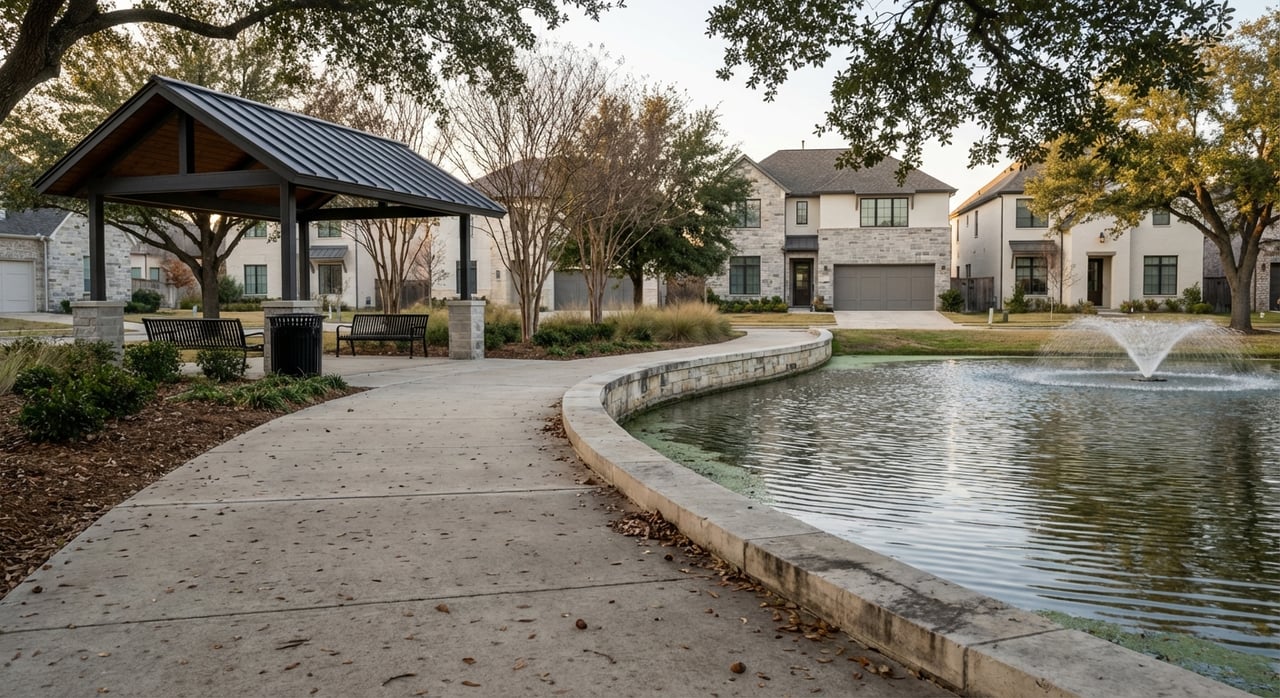
If you love time outside, Cross Creek Ranch puts nature front and center with lakes, wetlands boardwalks, and a large trail network that supports morning runs and evening walks. Multiple amenity complexes house water parks, fitness, and year-round programming that shapes family routines. Get a feel for the recreation landscape through the official Cross Creek Ranch waterparks and pools page.
Cane Island: resort-style hub
Cane Island offers a resort-like feel with lakefront gathering spaces, family pools, fitness, and on-site dining that make it easy to meet up close to home. You will also find a neighborhood hub where community life tends to center, from casual meals to seasonal events. New retail and restaurant mixes continue to evolve as the community grows.
Established options: Grand Lakes, Seven Meadows, Firethorne, Katy Lakes, Nottingham
These mature neighborhoods offer a range of home sizes and everyday amenities like neighborhood pools, tennis or pickleball, stocked lakes, and parks. Many sections are a quick drive to LaCenterra or Katy Mills for errands, dining, and weekend movies. The feel is practical and familiar, with the features residents use most right where you live.
Waller County growth: Grange and Sunterra Lakes
“West Katy” is expanding into Waller County with large new master plans that add fresh inventory and on-site schools over time. The Grange master plan outlines a high-unit-count community that will introduce more retail and local infrastructure as it matures. Similarly, recent reporting on Sunterra Lakes in Waller County highlights how new communities are reshaping commutes and adding more price and product variety.
Schools and the family calendar
Katy ISD is a major part of daily life. The district is large and growing, with ongoing school construction and periodic rezoning to keep up with enrollment. That means morning drop-offs, after-school practices, and weekend games often happen close to home, especially as new campuses open inside or next to newer communities. You can review district resources and updates on the Katy ISD website, and recent coverage of boundary changes and growth in the Houston Chronicle’s Katy ISD guide.
Many community calendars also sync around the school day. Swim team slots, kids’ classes, and seasonal splash events tend to follow campus schedules, so your family routine can stay local and predictable.
Getting around and commute patterns
Katy living is largely car-oriented, with the Katy Freeway (I-10), Grand Parkway (SH 99), and the Westpark Tollway shaping most routes. Public transit is limited for these neighborhoods, so driving or employer-supported commuting is the norm. For many west-side professionals, typical times to the Energy Corridor are often 15 to 30 minutes in normal conditions, with downtown and the Medical Center longer and more time-of-day sensitive. You can see a representative summary of access and estimated times in this Cross Creek Ranch area commute overview.
On hybrid days, neighborhood cafés and strong home internet make “work near home” easy. Trails and pocket parks offer a quick mid-day reset between calls.
Weekends, events, and local flavor
Weekends often rotate through a few reliable anchors:
- Morning farmers markets or seasonal festivals, including the annual Katy Rice Festival.
- Pool time or a kids’ event at your community center.
- Casual evenings with live music at local venues or a simple dinner close to home.
Historic Old Town Katy and local breweries create low-key gathering spots, while mall and cinema complexes offer an easy plan for family nights. As communities mature, on-site restaurants and cafés add more walkable or short-drive choices.
Everyday errands, care, and conveniences
Most daily needs are handled nearby. Grocery runs, quick shopping, and coffee meetups often happen within or near your community. LaCenterra functions like a central “main street” for many west Katy neighborhoods, and Katy Mills provides big-box shopping and weekend outings.
Healthcare access is strong, with major hospitals and specialty clinics on the west side. That makes urgent care, OB, and pediatrics a short drive for many residents.
Costs, HOAs, and smart checks
- Home prices: Submarkets vary. Many neighborhoods see price bands in the mid to upper 300s to 400s, with established or water-adjacent sections often higher. Scan current activity through HAR’s Katy listings snapshot.
- HOA and MUDs: Expect annual HOA dues and, in many newer areas, Municipal Utility District taxes. These fund amenities such as pools, lifeguards, landscaping, and events. Communities like Cross Creek Ranch detail amenity frameworks on their official amenities pages.
- Flood and drainage: Check flood zones, elevation, and drainage features during due diligence. Newer master plans often include engineered ponds and channels, but risk and insurance needs vary by section.
- New development: In fast-growing areas such as Waller County, near-term construction can add traffic and evolving school zones. The tradeoff is more on-site retail, schools, and amenities as each phase delivers, as seen in plans like Grange and coverage of Sunterra Lakes.
Find your fit with a local guide
Choosing between communities often comes down to your daily rhythm: school logistics, preferred commute, how much you want to walk to amenities, and the look and feel you want at home. If you are considering a move to Katy or Waller County, you do not have to figure it out alone. The Stone Haus Group pairs relocation expertise with design-forward guidance to help you compare neighborhoods, refine your search, and transition smoothly. Start your move when you are ready.
FAQs
Is Katy walkable inside master-planned communities?
- Village centers and amenity cores support short walks for coffee, parks, or the pool, but most daily errands remain car trips.
How far are Katy MPCs from major job centers?
- Many west-side communities estimate 15–30 minutes to the Energy Corridor in normal conditions; downtown and the Medical Center can run 35–60 minutes depending on traffic.
What do families do on weekends in Katy?
- Common rhythms include farmers markets or seasonal festivals, pool time, park play, and casual dining or movies close to home.
Can you run most errands without going into Houston?
- Yes; groceries, everyday shopping, fitness, and frequent dining are typically within a 5–15 minute drive in or near the community.
How do HOA and MUD fees work in Katy MPCs?
- HOAs fund amenities and maintenance through annual dues, while many newer areas use MUDs to finance utilities and infrastructure, collected through property taxes.